Projects
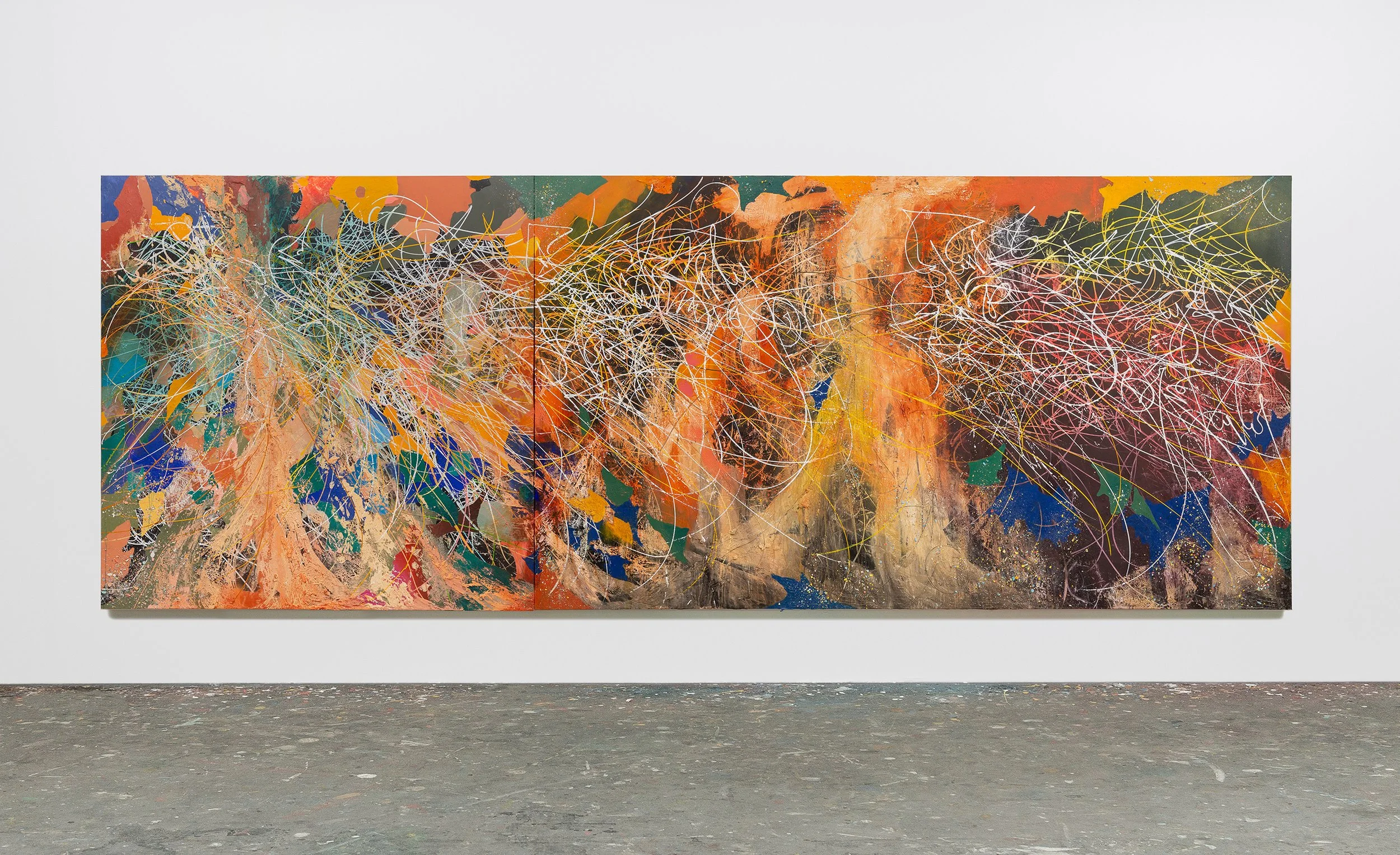
Art Basel Miami Beach, Meridians, 2024
Pathways draws on José Parlá’s Miami upbringing and Cuban heritage to explore displacement, immigration, and adaptation. The work was featured first in Meridians, the curated exhibition at Art Basel Miami Beach, curated by Yasmil Raymond, and engaged in dialogue with Parlá’s solo exhibition, Homecoming at Pérez Art Museum Miami. Through calligraphic style and layered markings, the painting reflects on identity, memory, and the ways personal histories are shaped by movement across places and generations.
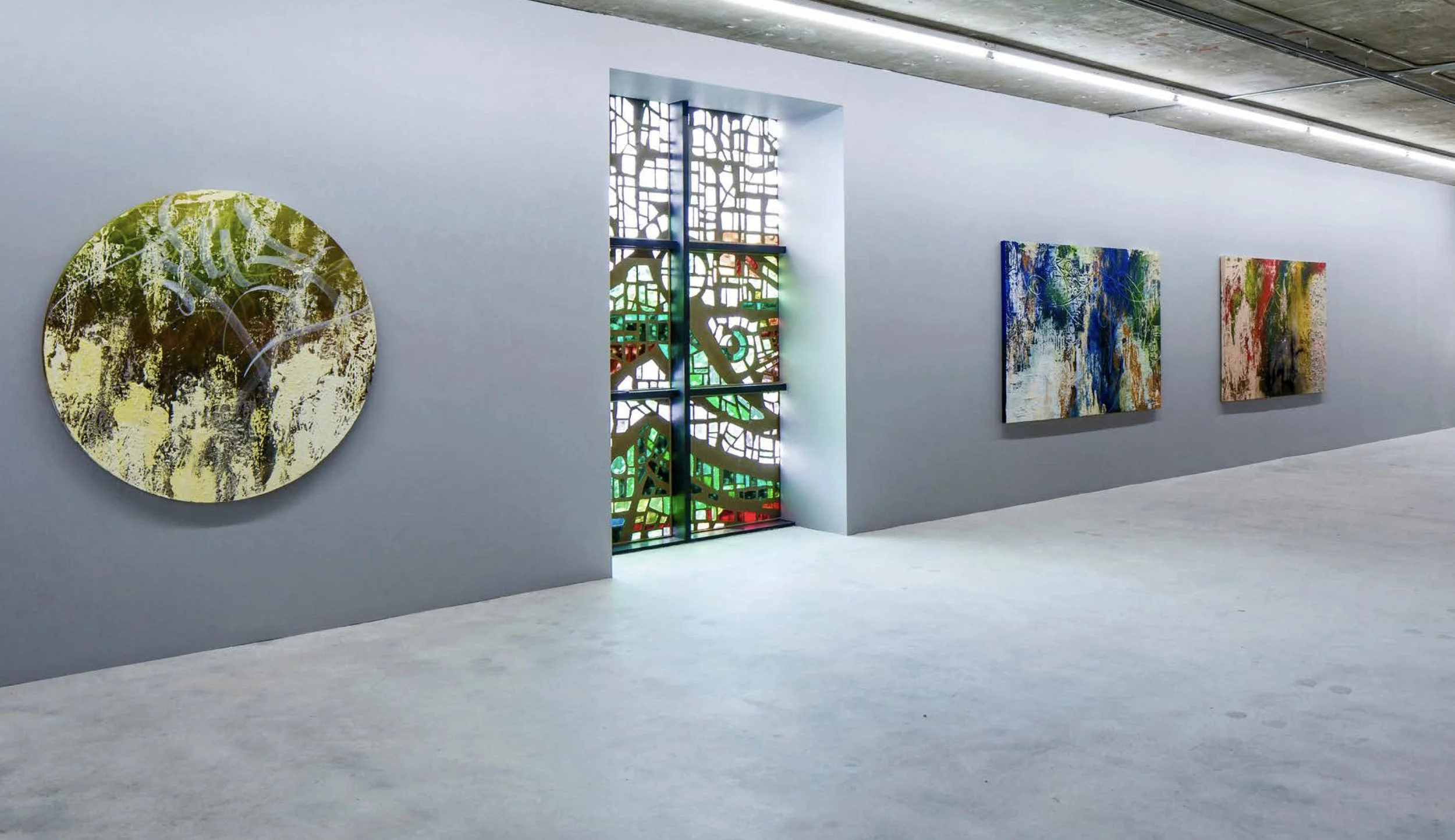
National Young Arts Foundation, Miami, 2016
ROOTS, presented at the National YoungArts Foundation in Miami in 2016 and curated by Laurie Ann Farrell, explored José Parlá’s ongoing dialogue with memory, place, and identity. Parlá created gestural landscapes where personal memories and historical narratives converge. Drawing from his Cuban heritage and Miami’s cultural landscape, the works function as a visual language to be read through feeling, with layers that reveal and conceal fragments of stories, time, and place.
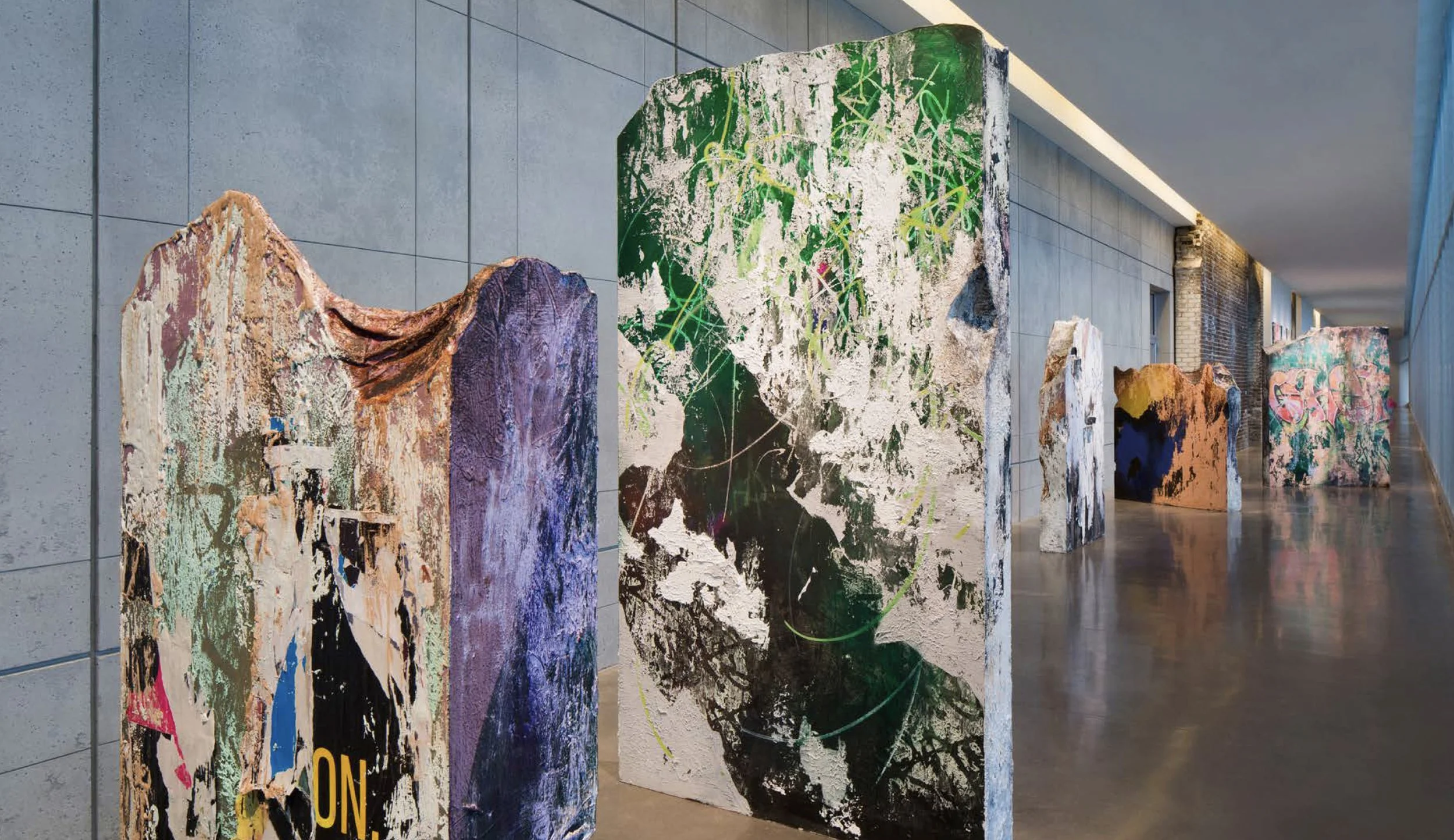
SCAD MUSEUM, Savannah, Georgia, 2017
ROOTS, presented as part of deFINE ART 2017, explored José Parlá’s language of memory, place, and identity through layered painting and gesture. Parlá developed a visual language of color, texture, calligraphic writing, hieroglyphic-like symbols, and abstract forms, creating compositions that function as layered records of personal experience and collective history. His marks move between legible and illegible writing, suggesting fragments of diaries, maps, walls, and urban traces.
Through repeated gestures, scraping, layering, and the accumulation of paint, surfaces appear to conceal and reveal memories over time. Colors, shapes, and materials carry associations with particular places and histories, while titles provide additional points of entry into the work. The paintings operate as gestural landscapes that invite the viewer to navigate their surfaces and read them through feeling rather than literal language. Rooted in Parlá’s Cuban heritage and his experiences of Miami, New York, and other places, the exhibition examined how identity is formed through memory, migration, and the layered histories of place.

Pola Museum Annex, Tokyo, 2025
Home Away from Home brings together works by José Parlá presented at the Pola Museum Annex and Kotaro Nukaga in Tokyo. The exhibition reflects Parlá’s longstanding relationship with Japan and his exploration of memory, migration, identity, and the emotional landscapes of place. Through layered surfaces, fragments of writing, color, and gesture, the paintings become records of lived experience—tracing the ways personal and collective memories travel, transform, and find new forms of belonging. The exhibition also marks a continuation of Parlá’s dialogue with Japan, developed over more than two decades.

Pola Museum Annex, Tokyo, 2025
Home Away from Home brings together works by José Parlá presented at the Pola Museum Annex and Kotaro Nukaga in Tokyo.
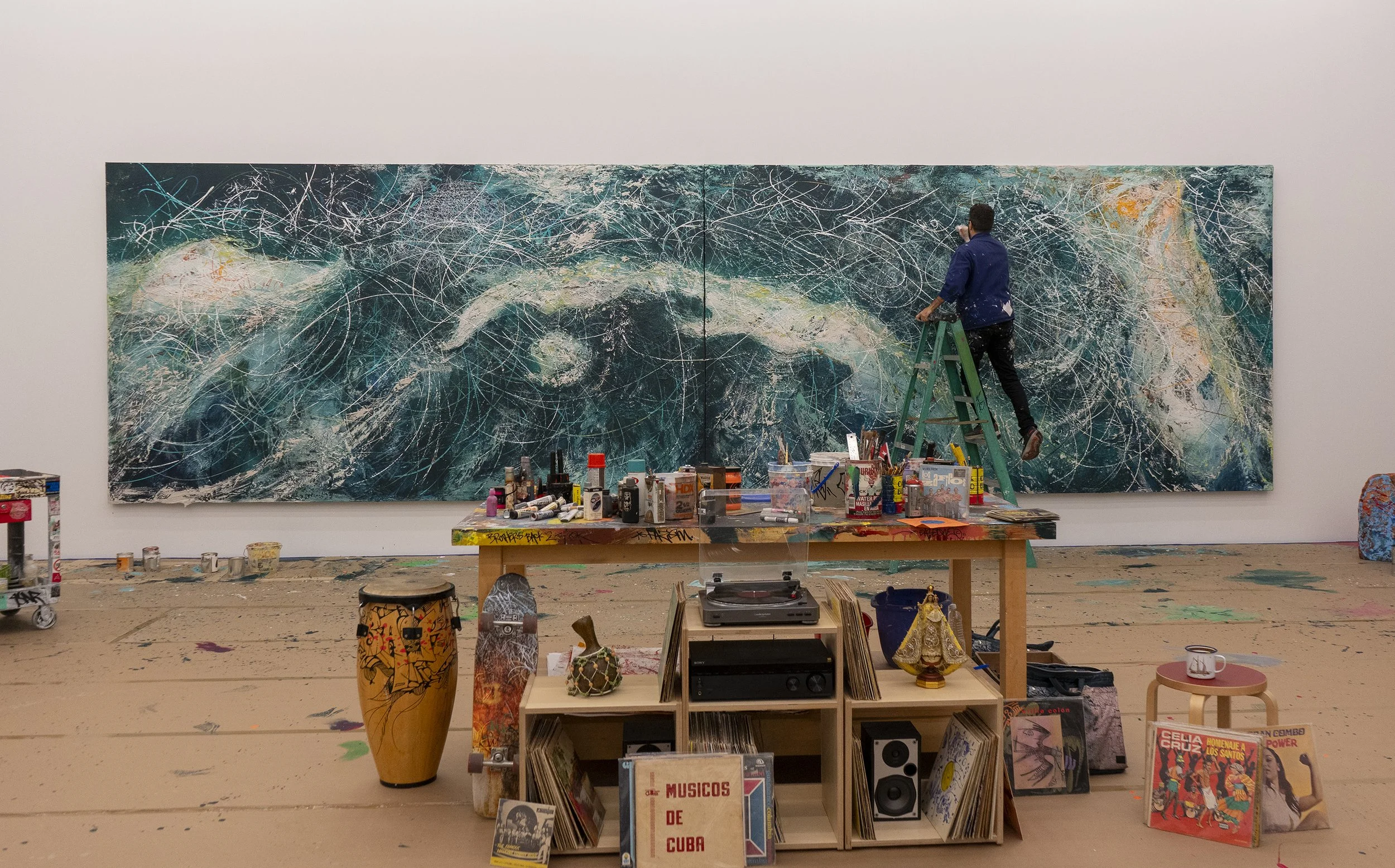
Pérez Art Museum Miami, 2025
Homecoming: Before Time, The First Migrations reflects the Caribbean, and gulf region as a geography shaped by movement, memory, and exchange. Through layered marks and shifting forms, José Parlá evokes ancestral migrations and Latin American diasporic journeys across seas and generations. Home becomes not a fixed place, but a living memory carried through language, rhythm, and belonging.
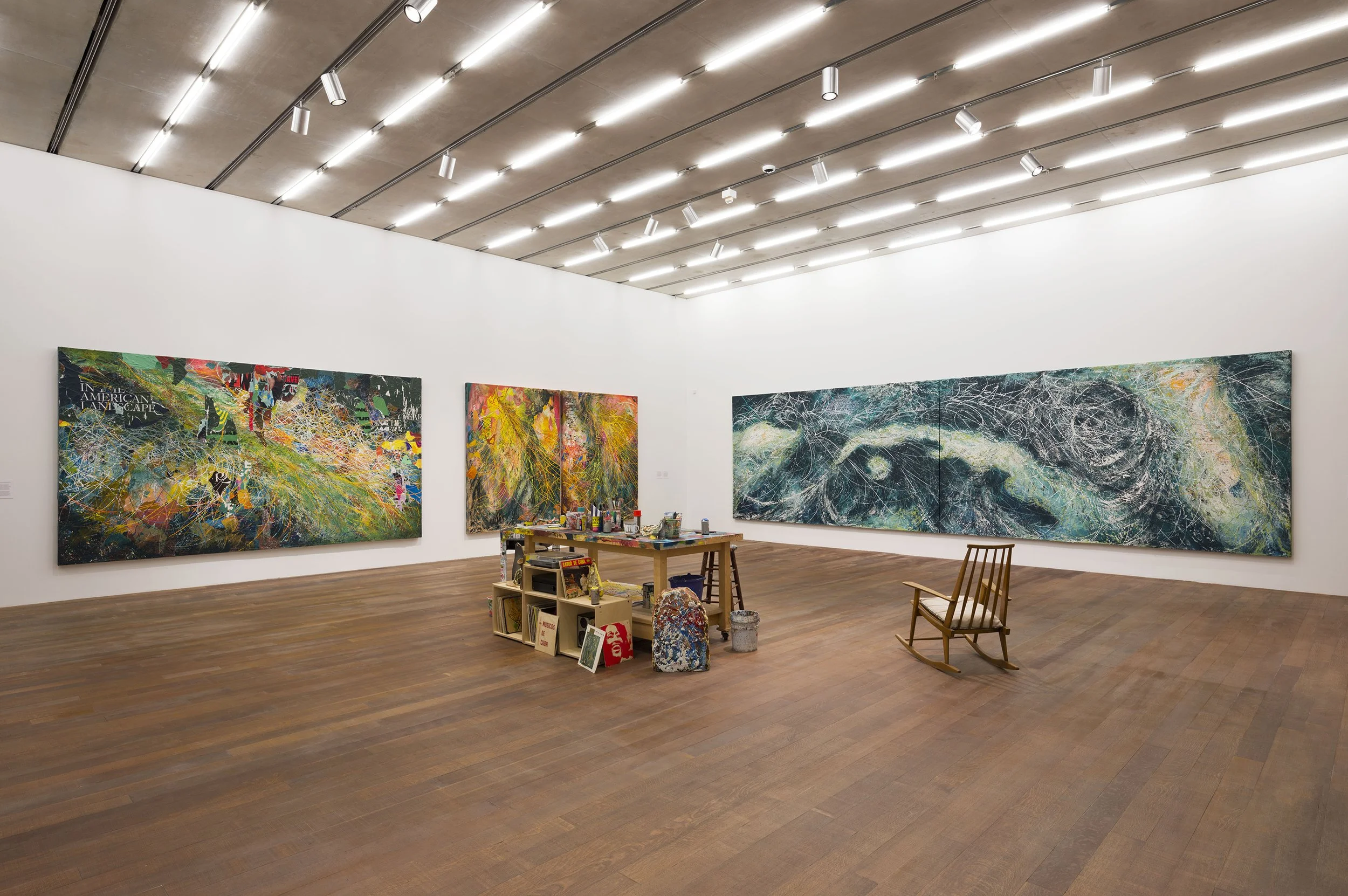
Pérez Art Museum Miami, 2025
The Pérez Art Museum presented José Parlá: Homecoming, curated by Maritza Lacayo, was the artist’s first solo museum exhibition in his hometown. Featuring an elaborate, two-part exhibition that allowed visitors to observe Parlá’s dance-like technique in real time as he painted a site-specific mural for the first iteration of the exhibition. The second iteration opened the museum gallery transformed and converted into Parlá’s studio, a room full of paint-covered tables, a lively Cuban-inspired record collection, and decades of Parla’s archival memorabilia.
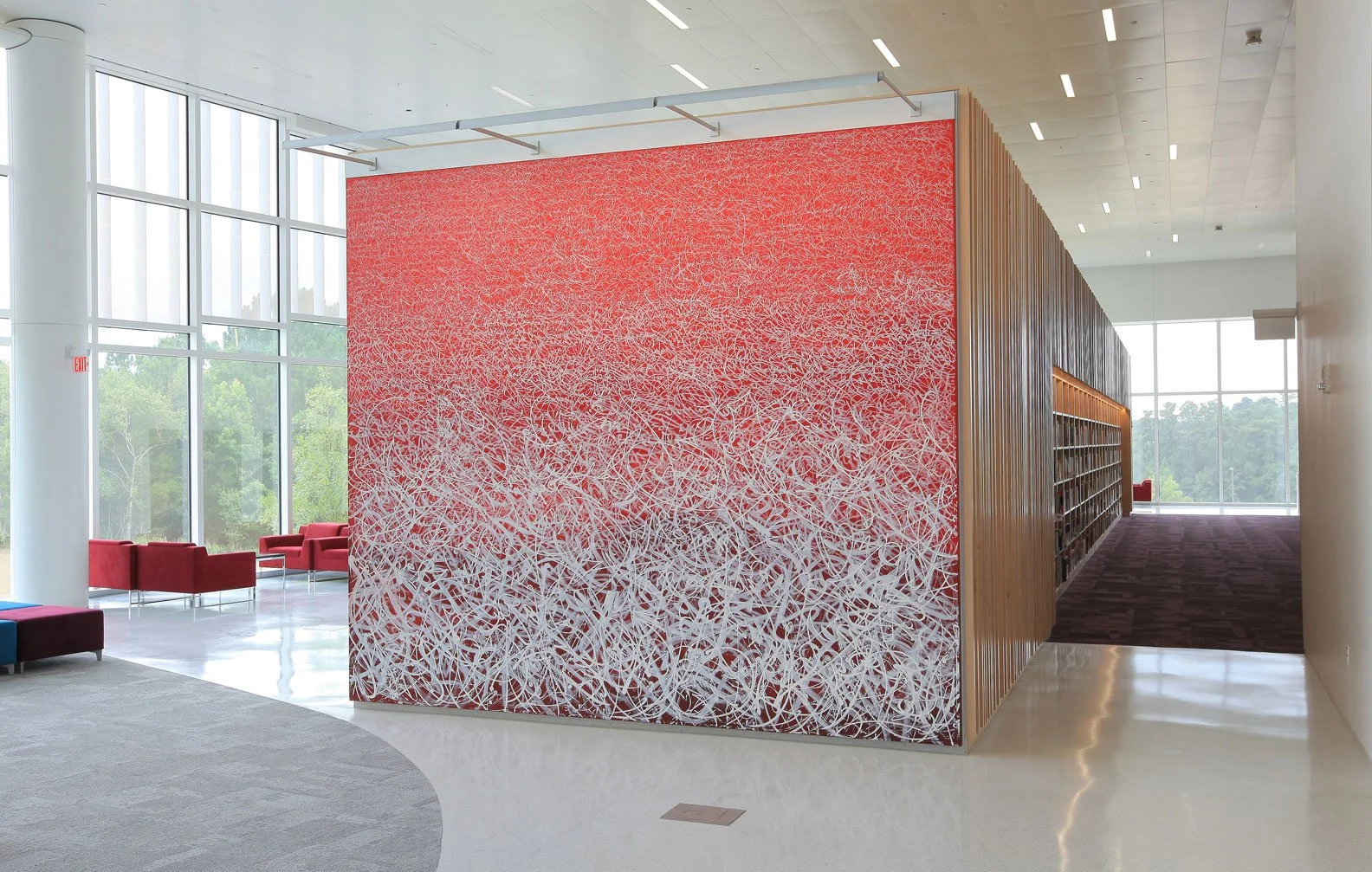
North Carolina State University, 2013
Nature of Language (2013) is a written painting inspired by walks through Raleigh and encounters with its historical and cultural landscapes. Combining words, gestures, names, and hieroglyphic forms, it creates an abstract visual language—part diary, part poetic landscape. Rooted in calligraphic traditions, the work explores language as a reflection of our present and a bridge between people.
Acrylic, ink, and Gamvar on wood
Snøhetta Architecture for Hunt Library, NC State University
16 × 16 feet
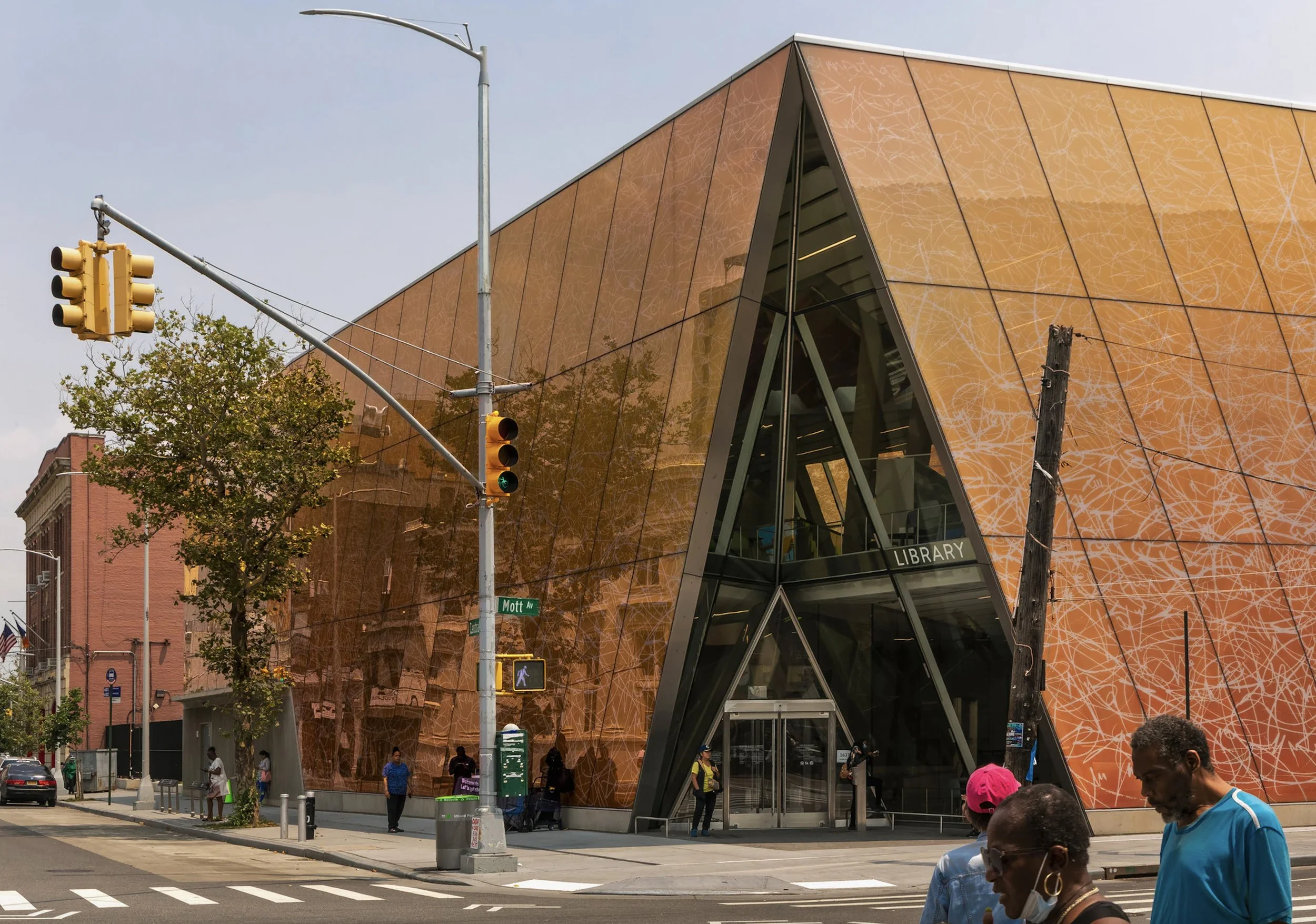
Far Rockaway Writer's Library, Queens, New York, 2024
Where language and knowledge come together. A collaboration with Snøhetta and José Parlá.
The new Far Rockaway Library in Queens is designed as a collaboration between Snøhetta and Brooklyn-based contemporary artist José Parlá to reflect Far Rockaway’s diversity and dynamism. Serving as a community gathering place and resource for knowledge, the library symbolizes resilience and provides a platform for shaping Far Rockaway’s future.
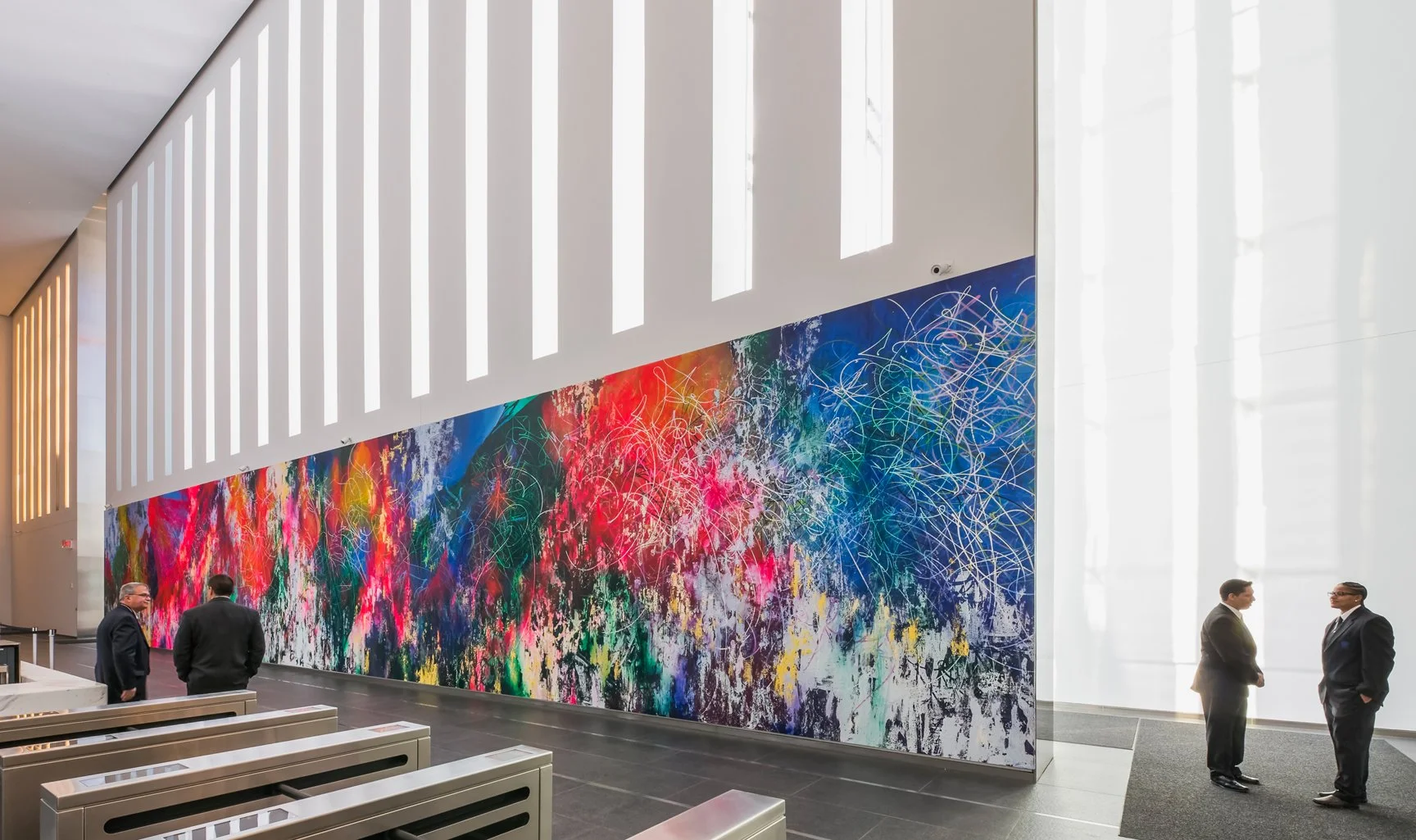
One World Trade Center, New York City
One Union of the Senses is a permanent mural installed in the lobby of One World Trade Center. Created with the concept of synesthesia in mind, the work transforms color, gesture, and emotion into a visual expression of unity. It stands as a love letter to New York City and to the resilience, energy, and connection that define it.
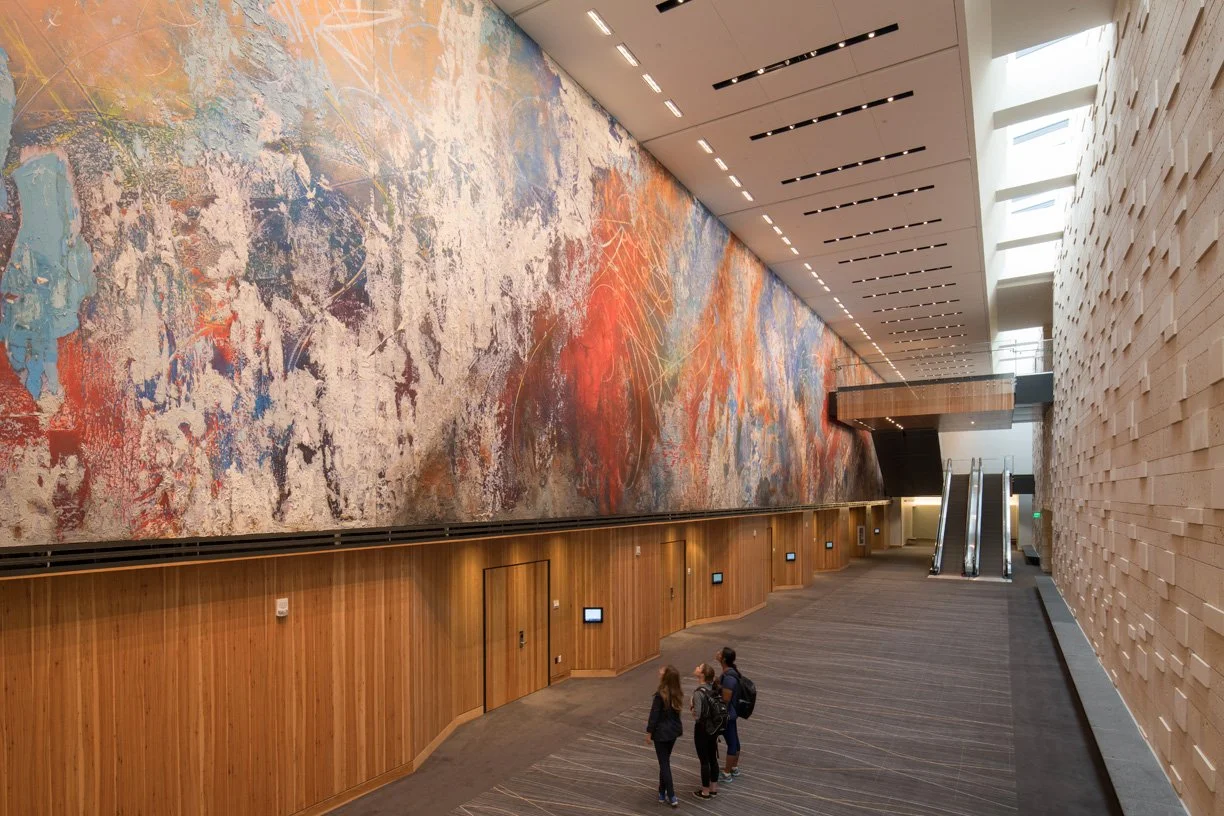
University of Texas at Austin, 2018
Commissioned by the University of Texas at Austin’s Landmarks program, Amistad América is a monumental painting reflecting Austin’s landscape, urban fabric, and layered cultural history through collage, textured surfaces, and Parlá’s signature calligraphic marks.
Located at Guadalupe Street and Martin Luther King Jr. Boulevard, the work honors the region’s intertwined Indigenous, African, and Latin American histories. Its title evokes friendship, the origins of the name Texas, and the historic La Amistad case, while América highlights shared histories, migration, and cultural exchange across the hemisphere.
Curator: André H. Bober
Landmarks
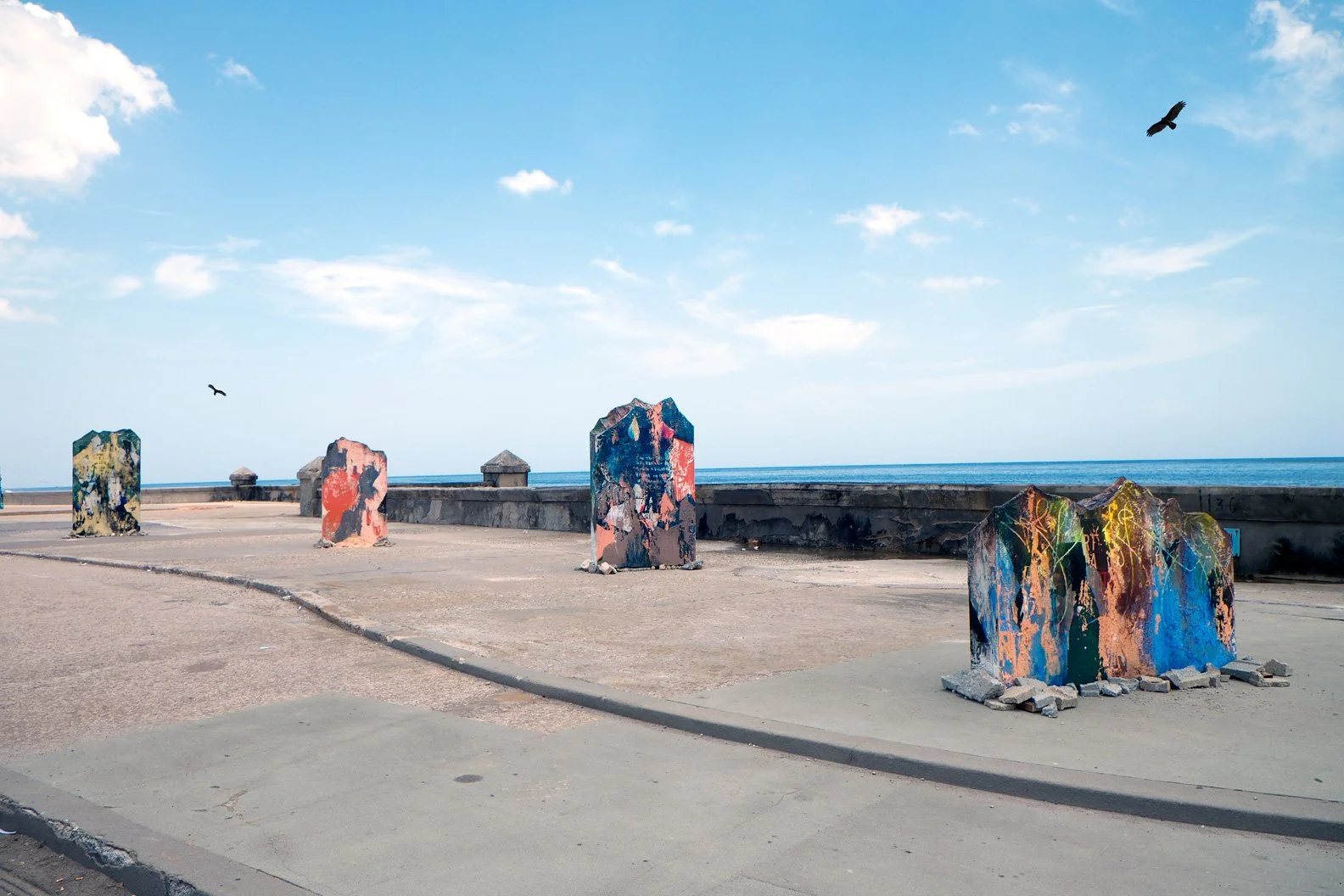
12th Havana Biennial, Cuba, 2015
As part of the 12th Havana Biennial, Segmented Realities presented ten sculptural paintings by José Parlá. Drawing on fragments of urban sites marked by social and cultural upheaval, the works layer expressive, street-inspired marks that evoke histories, identities, and imagined futures. This segment of the Havana Biennial was part of the Detras del Muro program curated and organized by Juanito Delgado.
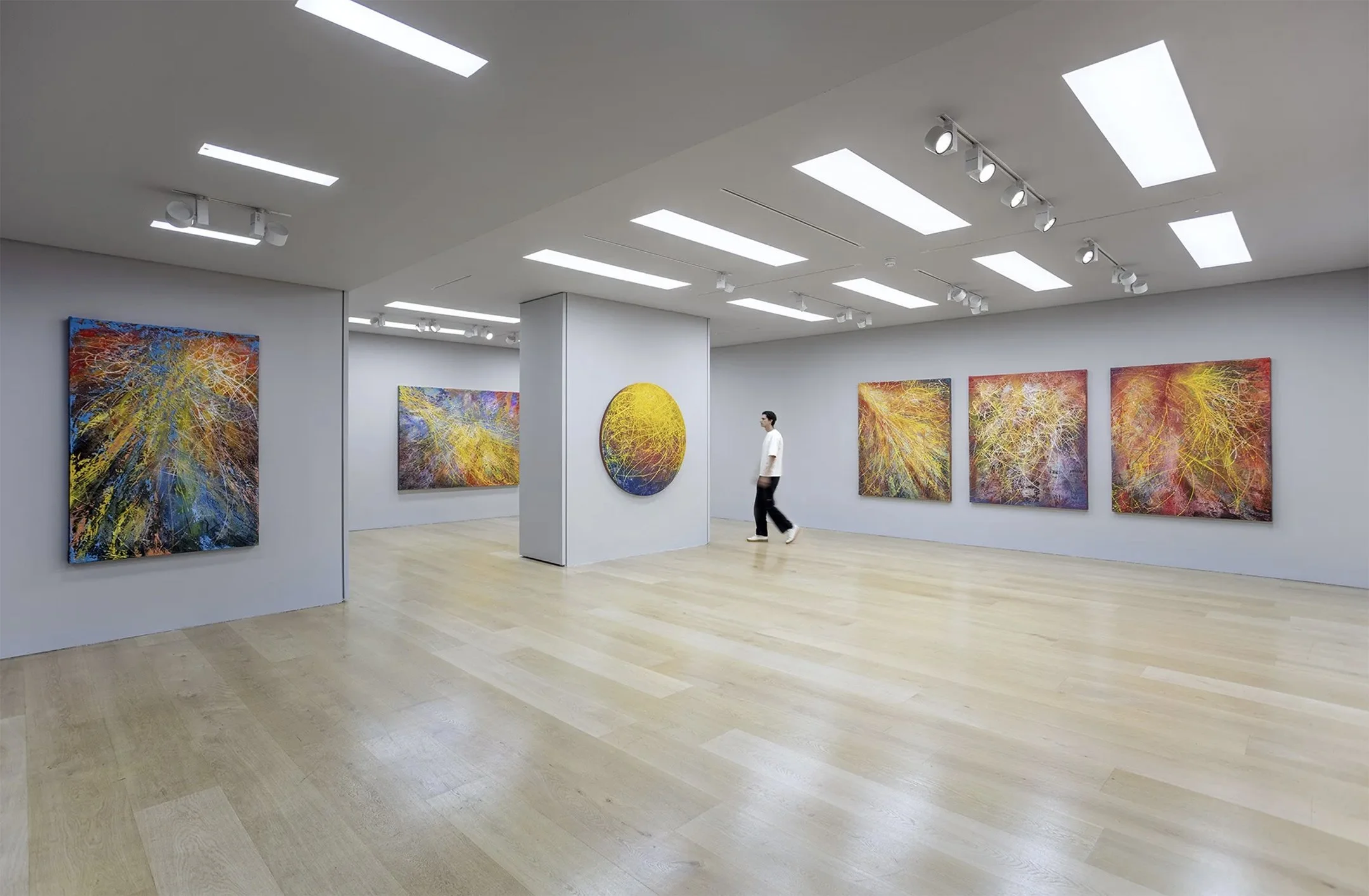
Phosphene, Ben Brown Fine Arts, London, 2023
Parlá's Phosphene series began while the artist spent time in his hometown of Miami, Florida, during what was meant to be a brief period of respite between his schedule of exhibitions around the world. There, surrounded by nature and brilliant sunlight, the artist began to experiment with painting outdoors - a stark contrast to his industrial studio in Brooklyn - using the sun to elucidate the abstract visual language in his mind. This exhibition takes its title from the visual phenomenon that gives the impression of seeing light with eyes closed. Appearing as flashes of colourful light, such as dots, swirls or shapes that wander slowly across a person's vision, the term 'phosphene' is derived from Greek phōs 'light' + phainein 'to show'.
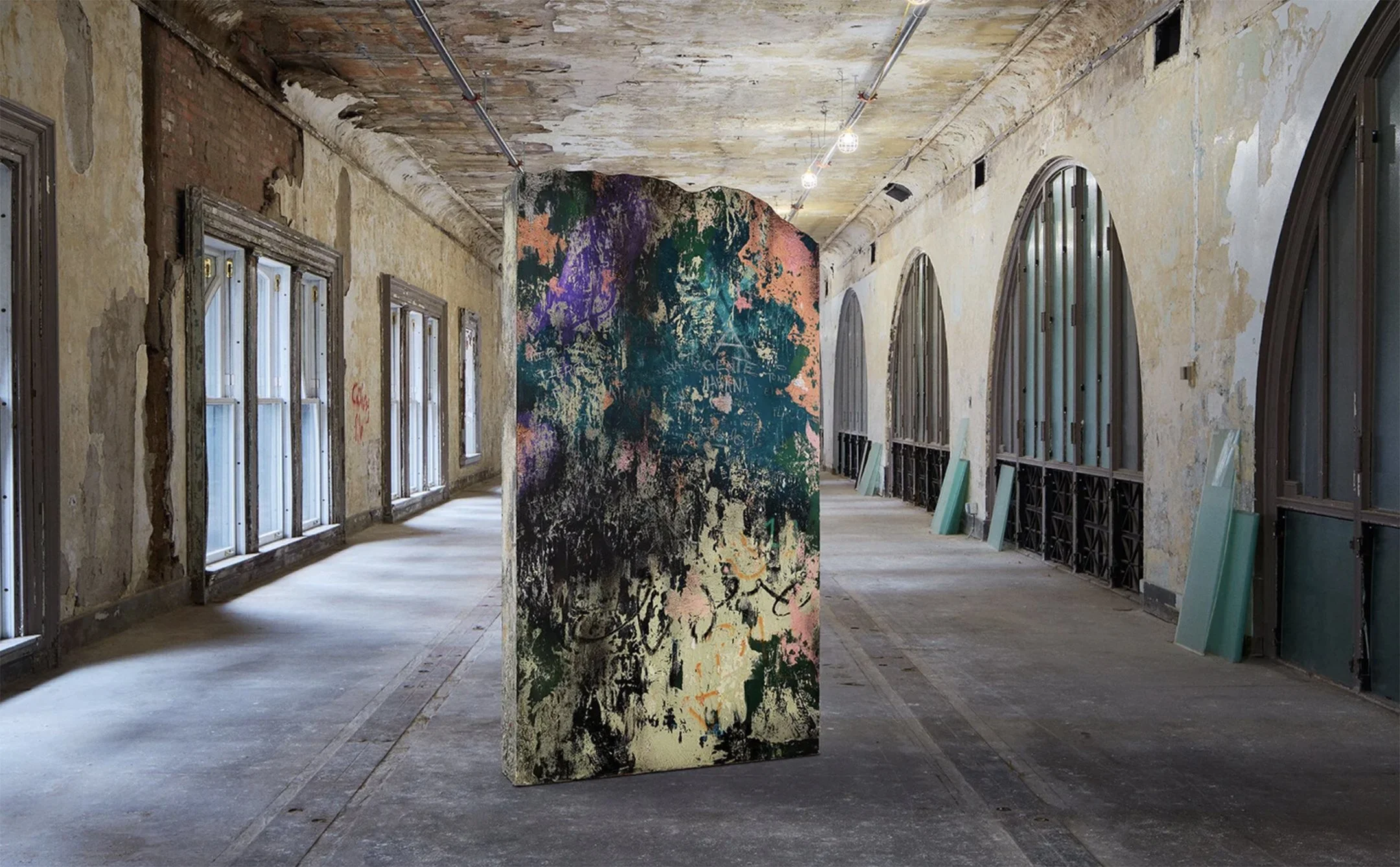
Polarities, Library Street Collective, Detroit 2020
As digital strategies continue to expand in the art world, Library Street Collective’s SITE: Art and Architecture in the Digital Space offers a more meaningful connection between visual art and the built environment. Through storytelling, architectural history, and artist-led perspectives, each exhibition responds to its digital setting and explores the relationship between art and place. Parla’s Segmented Realities extends this exploration by examining how physical and digital spaces shape our perceptions of place, memory, and experience.

Polarities, Library Street Collective, Detroit 2022
Polarities at Library Street Collective presented paintings and sculptures created after José Parlá’s recovery from COVID-19, exploring resilience, spirituality, and human connection. Through layered surfaces and gestural script, the exhibition examined the ideological and social polarities between Havana and Detroit—cities shaped by communism and capitalism, whose walls record histories of conflict, activism, neglect, resistance, and transformation.
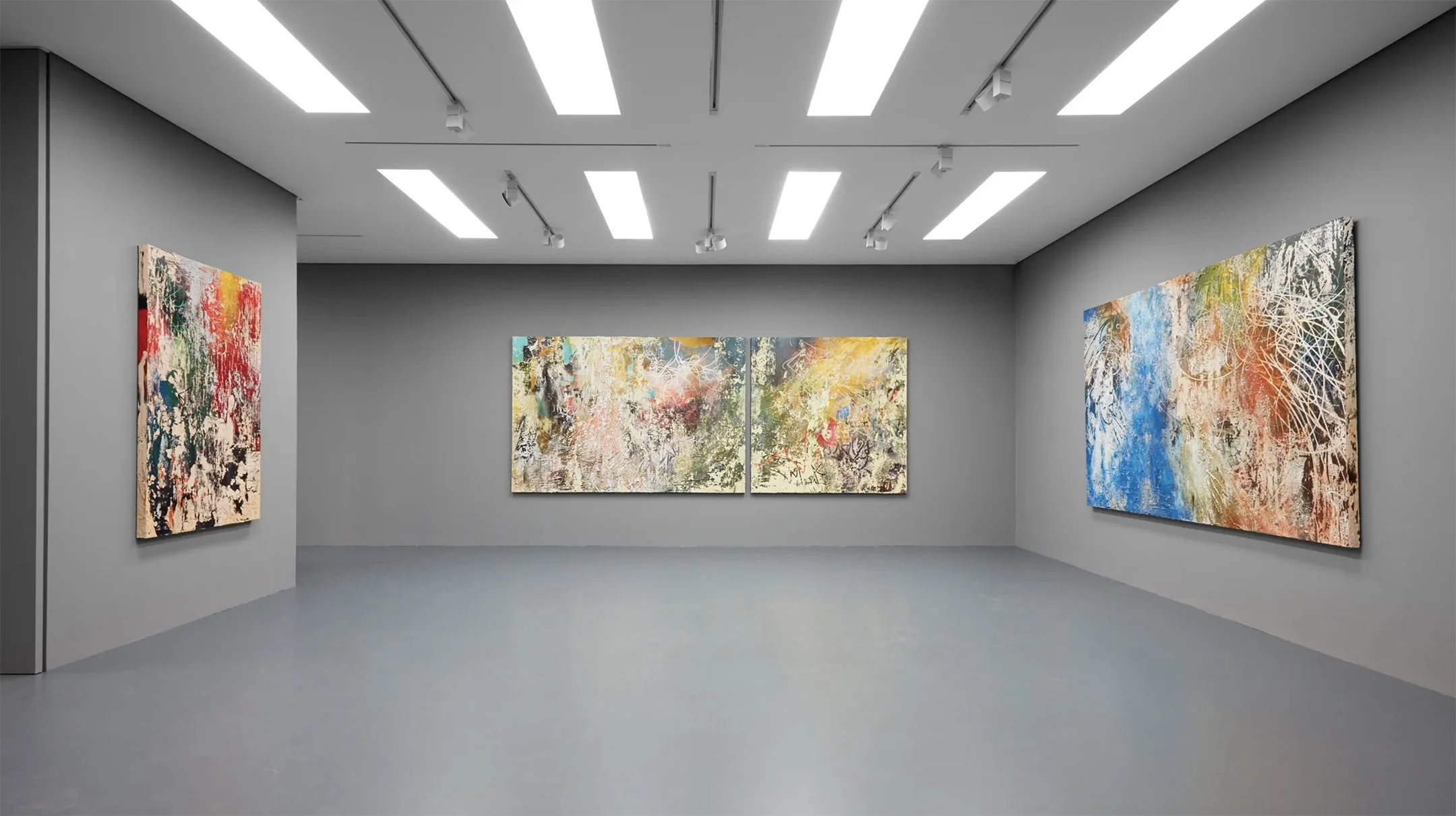
Echo of Impressions, Ben Brown Fine Arts, London, 2018
In Echo of Impressions, Parlá presents a new visual reality which explores his fascination with culture, architecture, myth, and language. His paintings are composed of striking colours and a dense maze of paints and textures which allude to the cityscape. Among the thick coats of acrylic, spray paints and pigmented powders one can find pieces of the city itself worked into the very fabric of the canvases. Advertising posters, political slogans, building debris and recycled materials are employed to highlight economic, social and environmental issues as witnessed by the artist in the relentless cycle of construction and destruction within the city.
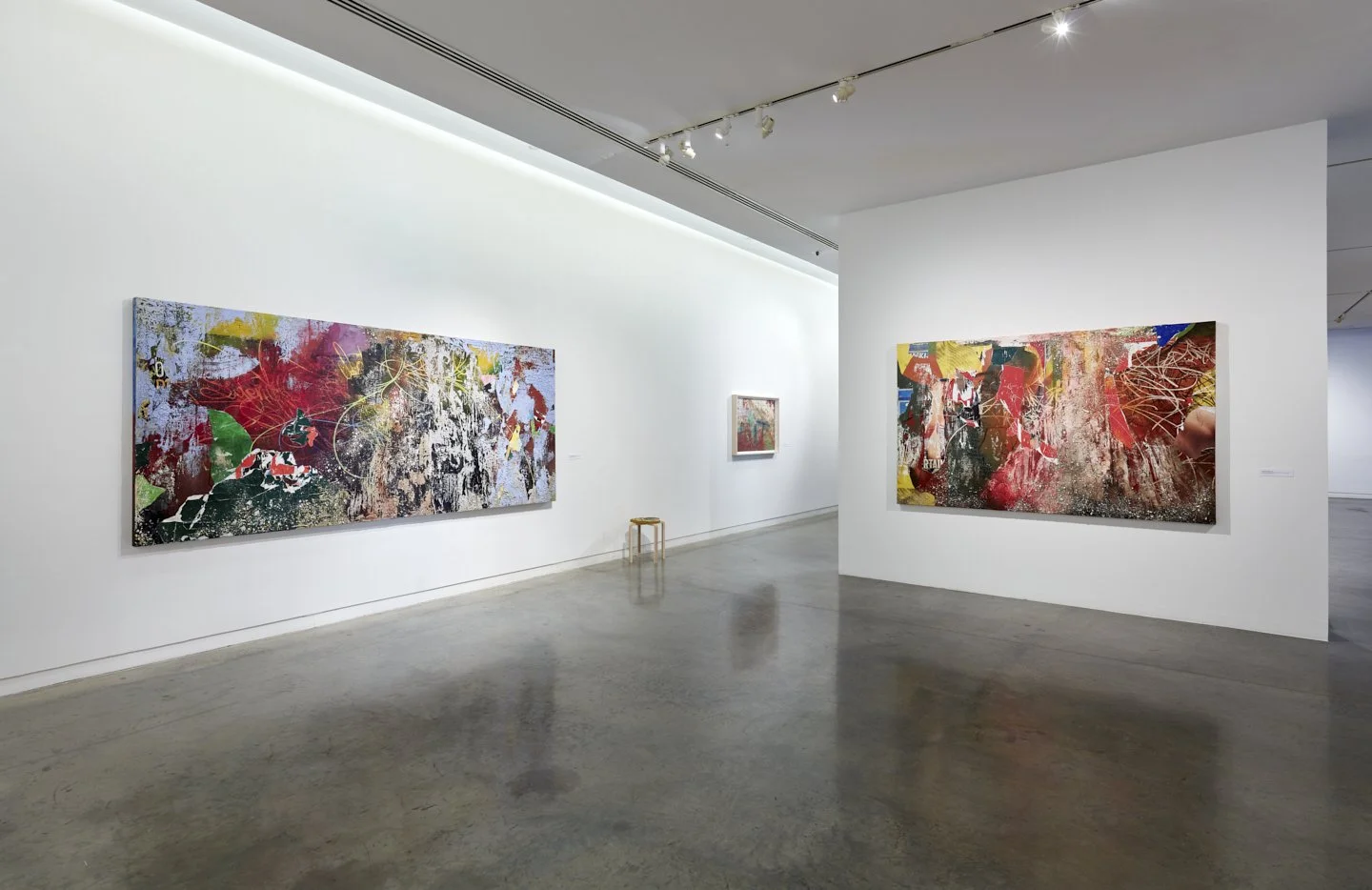
Bronx Museum of the Arts, 2020
José Parlá: It’s Yours was the artist’s first solo museum exhibition in New York City. Organized by Manon Slome, it explored the Bronx’s influence on Parlá’s painting and perspective on urban life.
Through layered paintings, drawings, sketchbooks, and site-specific works, the exhibition addressed hip-hop, redlining, gentrification, displacement, and structural racism, evoking the city’s walls, memories, and traces of urban life.
Curator: Manon Slome
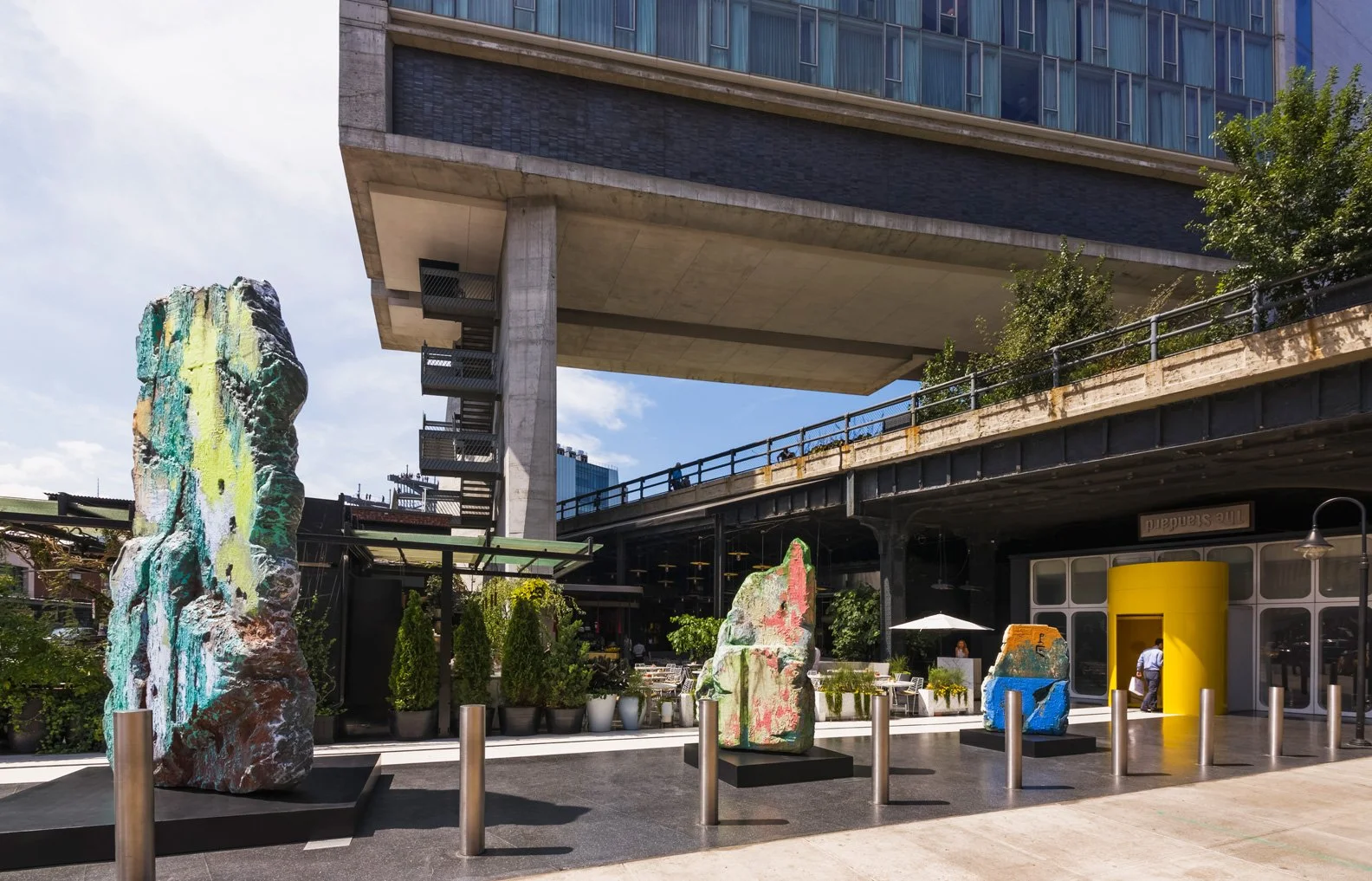
Segmented Realities, 2015
Segmented Realities is a series of three sculptures representing Cuba, Puerto Rico, and Miami. Made from steel, fiberglass, and epoxy paint, the works explore migration, memory, cultural exchange, and layered identity through fragmented forms and richly textured surfaces. The installation was presented at the Standard High Line in New York as part of Body, Surface / Action, Space, organized by Bryce Wolkowitz and Mary Boone.
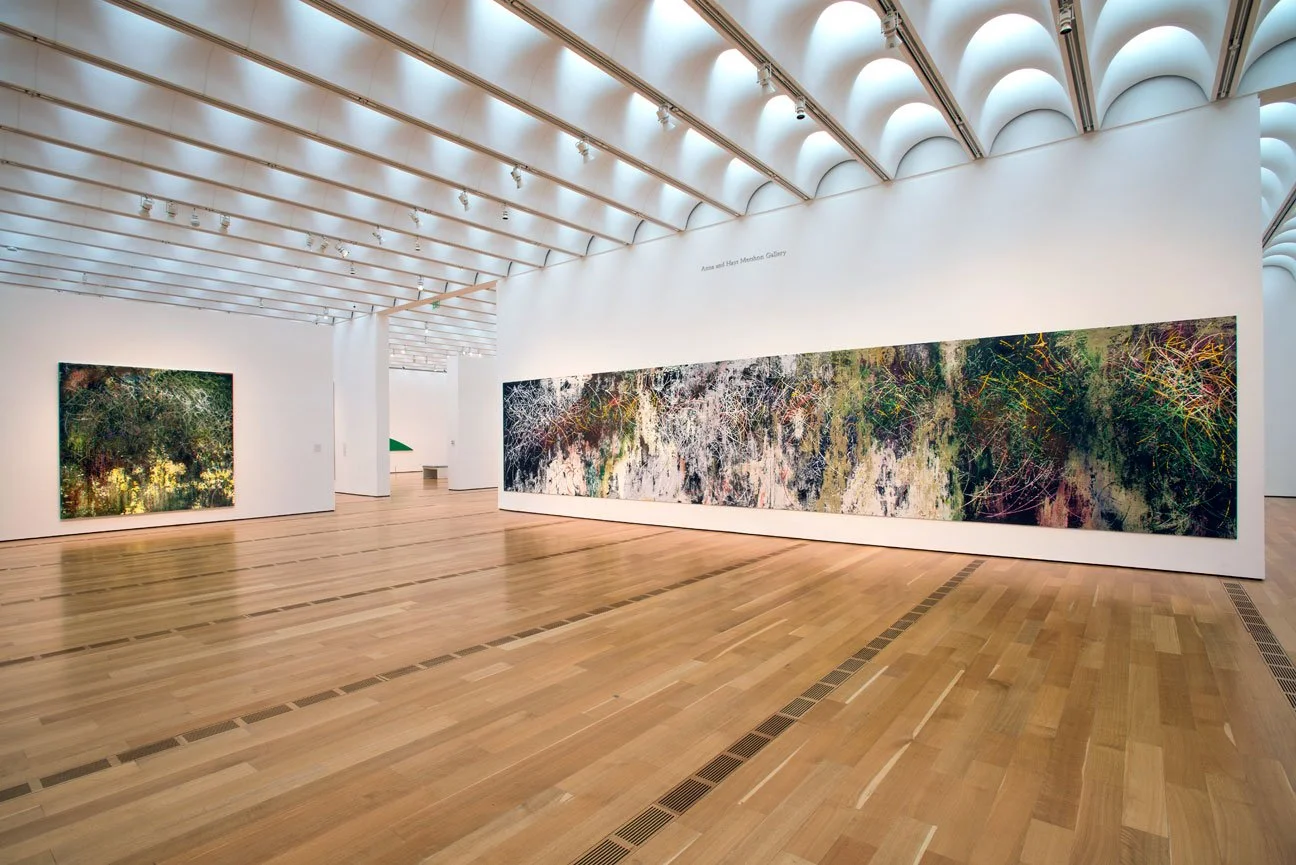
High Museum of Art, Atlanta, Georgia
Segmented Realities, 2015
Segmented Realities presents a group of ten sculptural paintings by José Parlá that suggest cultural fragments salvaged from urban sites that have experienced social and cultural upheaval and transformation. As do segments of the Berlin wall, Parlá’s sculptures bear witness to waves of history that seem to be inscribed on their surfaces, told in an expressive and poetic language of the street. These works act as palimpsests, surfaces bearing layers of marks, on which ensuing generations might imagine their own manifestos and declarations of selfhood.
Curator: Michael Rooks

High Museum of Art, 2015
The sculptural Paintings from Parlá’s Segmented Realities series (2015) are freestanding, double-sided structures designed to resemble freestanding, decayed fragments of excavated city walls. Originally debuted at the High Museum of Art and later installed outdoors at The Standard, High Line, these works serve as heavy, physical "memory documents" that preserve the ephemeral nature of changing cityscapes.
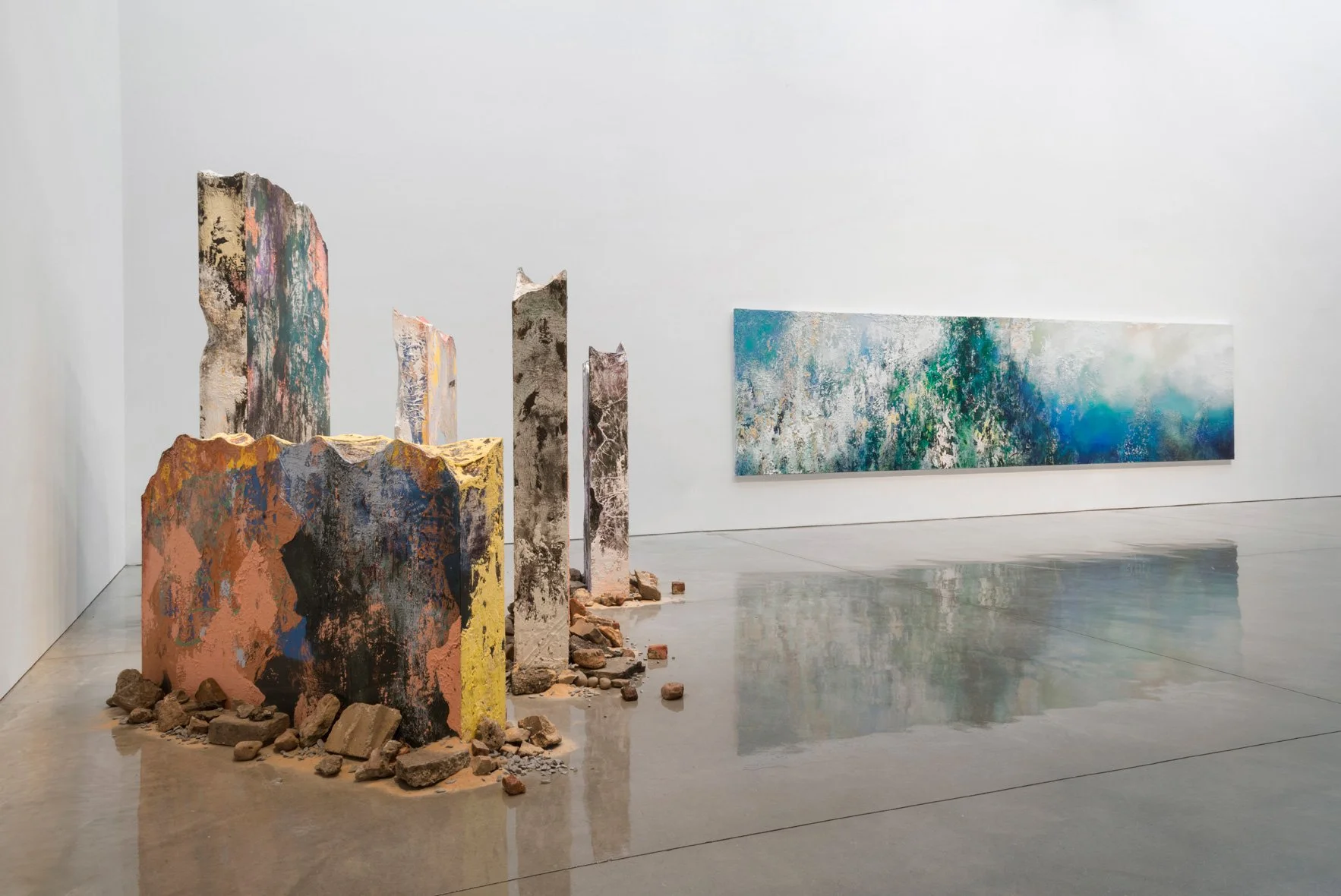
Mary Boone Gallery, New York
Surface Body / Action Space, 2015
Surface Body / Action Space explored material, gesture, memory, and place through paintings and sculptures. The works examined identity between Cuba and the United States as shaped by movement and lived experience rather than fixed geography.
The Surface Body works reflected on walls, urban structures, and political boundaries, while Action Space used energetic gestures and expansive color fields to evoke freedom and possibility. Together, the works blurred political and psychological borders through the tension between density and openness, restraint and movement.

Yuka Tsuruno Gallery, Tokyo Japan, 2013
Haru Ichiban / First Wind of Spring / Through the Tokyo Alleyways—Her Voice Sings (2013) reflects José Parlá’s longstanding relationship with Japan. Created for Prose, the painting explores poetic, gestural mark-making, translating the atmosphere of Tokyo’s alleyways into layered movement, rhythm, and color.
8 x 45 feet mixed media on canvas
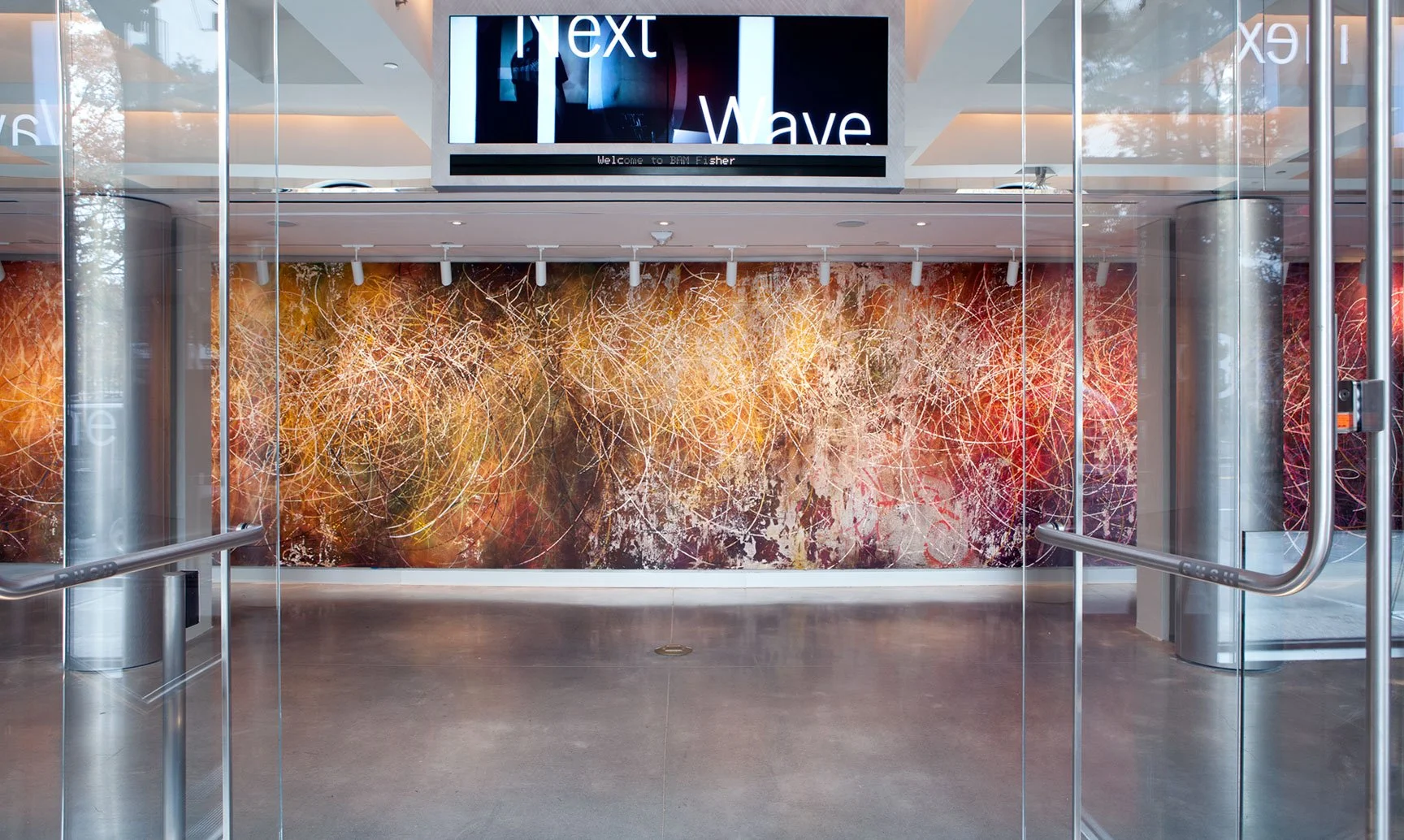
Brooklyn Academy of Music, 2012
Commissioned by Brooklyn Academy of Music for a permanent installation for the building, Gesture Performing Dance, Dance Performing Gesture was created on-site by José Parlá. Spanning an 11-by-2-meter canvas, the work reflects his signature spontaneous, performative style and is currently on view at BAM Fisher.
Oil, acrylic, enamel and plaster on wood
7 x 37 feet
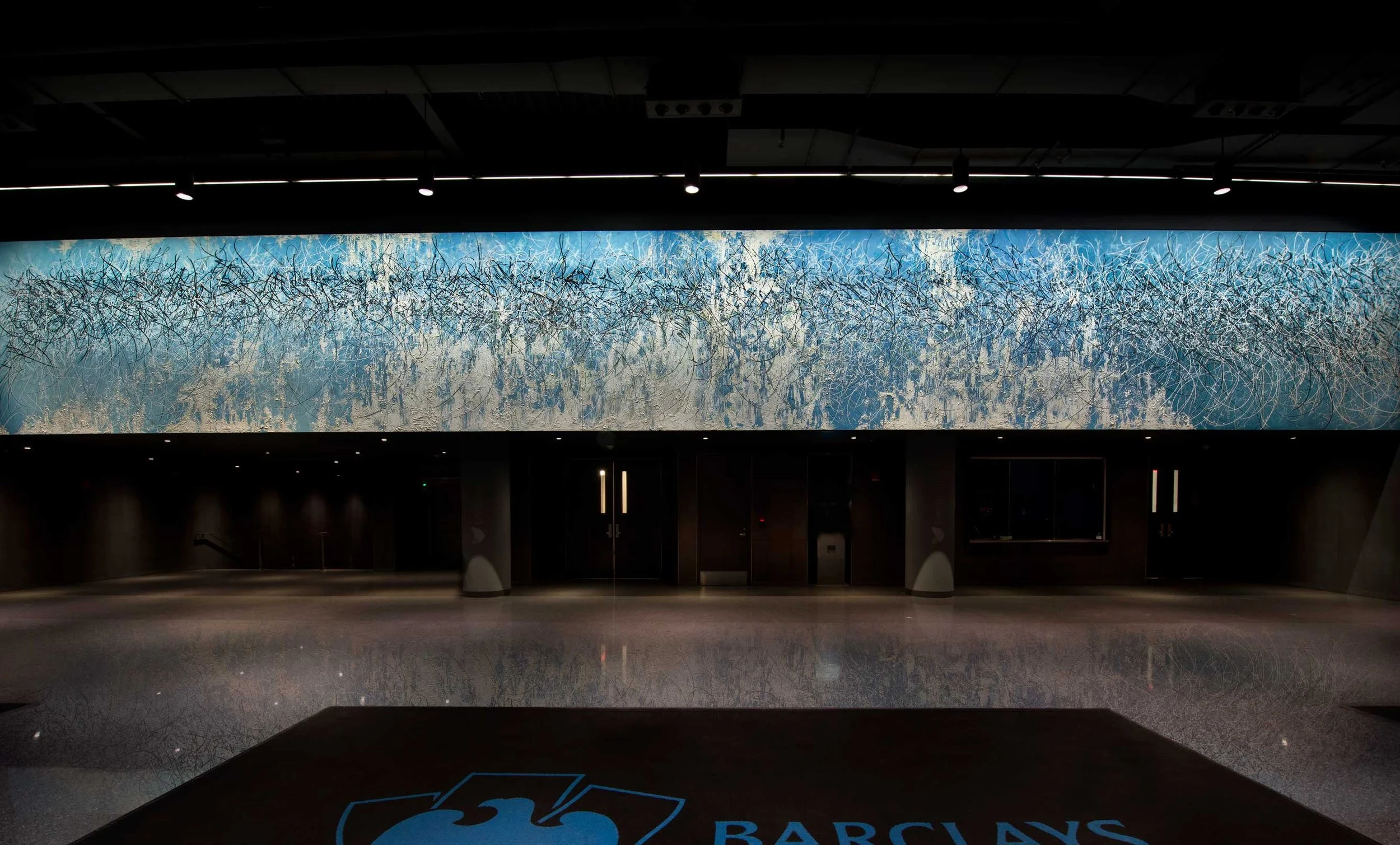
Barclays Center, Brooklyn, New York 2013
Diary of Brooklyn is a site-specific mural by José Parlá, commissioned by Barclays Center. Drawing on the borough’s layered history and vibrant culture, the work brings together gestural marks, calligraphy, and abstract forms to create a dynamic visual portrait of Brooklyn.
Diary of Brooklyn, 2015
Acrylic and oil paint on wood
10 feet x 70 feet
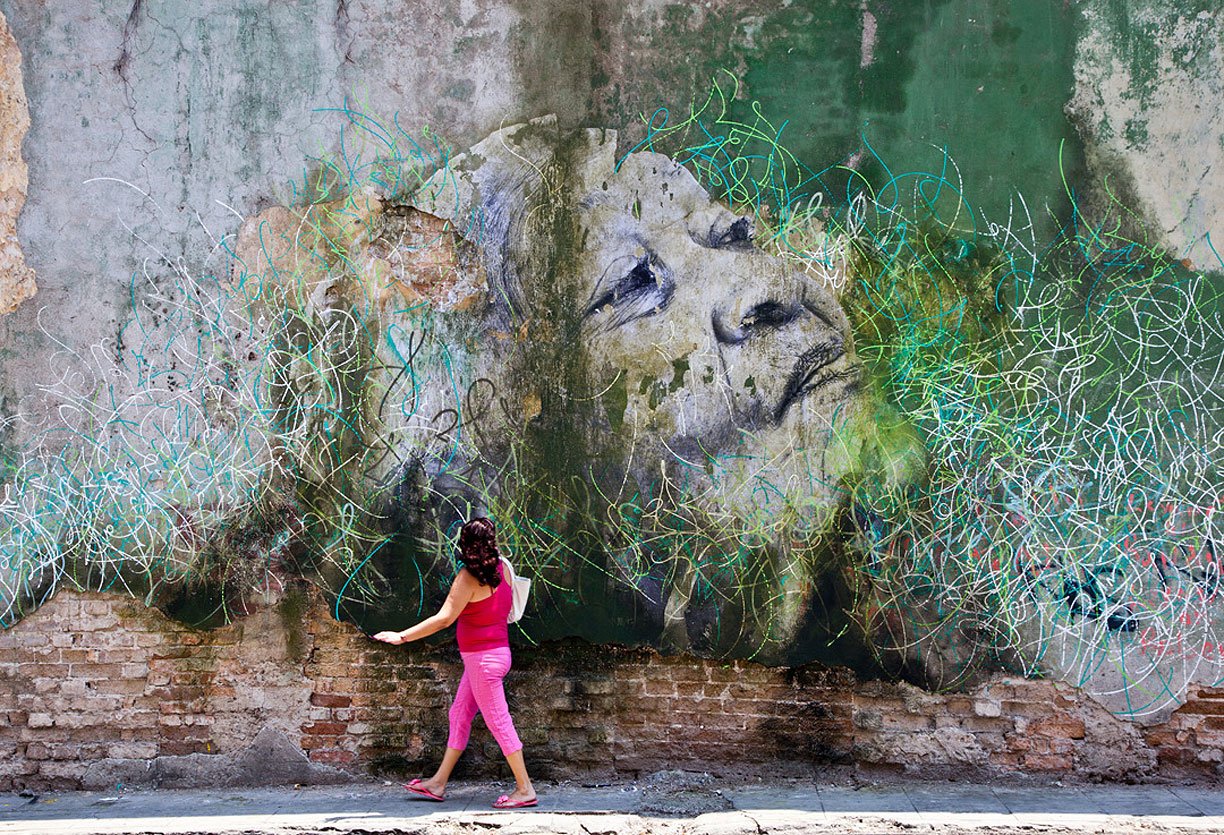
Wrinkles of the City Havana, Cuba, 2012 JR and José Parlá
In May 2012, JR and José Parlá collaborate on their iteration of The Wrinkles of the City: a huge mural installation in Havana, undertaken for the Havana Biennale, for which JR and Parlá photographed and recorded 25 senior citizens who had lived through the Cuban revolution, creating portraits which Parlá, who is of Cuban descent, interlaced with palimpsestic calligraphic writings and paintings.
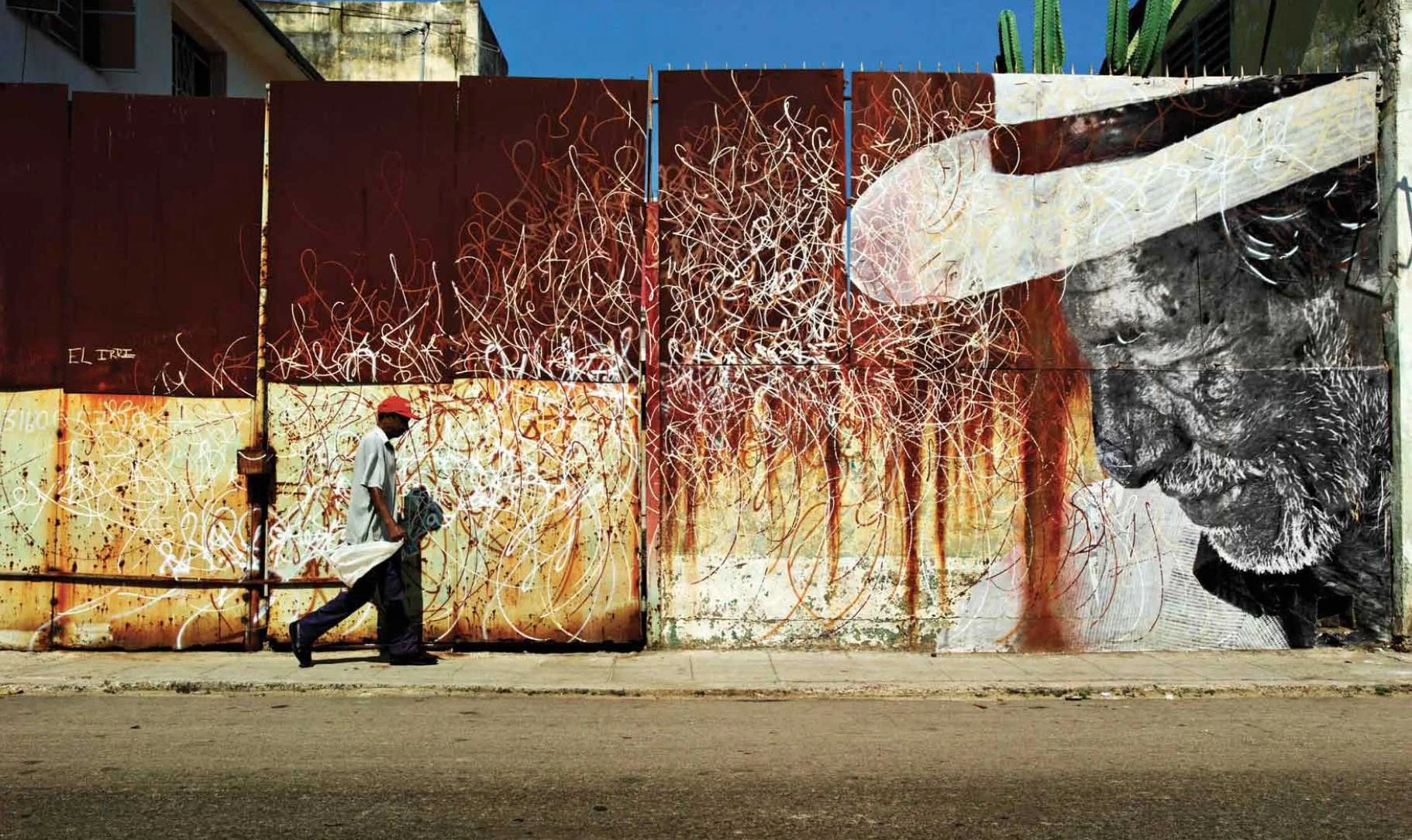
Wrinkles of the City Havana, Cuba
The Wrinkles of the City: Havana, Cuba was also collaborative film by JR and José Parlá that documented Havana as a city shaped by memory, resilience, and the passage of time. Through JR's large-scale photographic interventions and Parlá's calligraphic paintings created directly on the city's weathered walls, the project explored the layered histories embedded within Havana's architecture and its people. The film revealed the city as a living archive, where portraiture, abstraction, and urban surfaces converged to reflect the enduring relationship between place, identity, and collective memory.
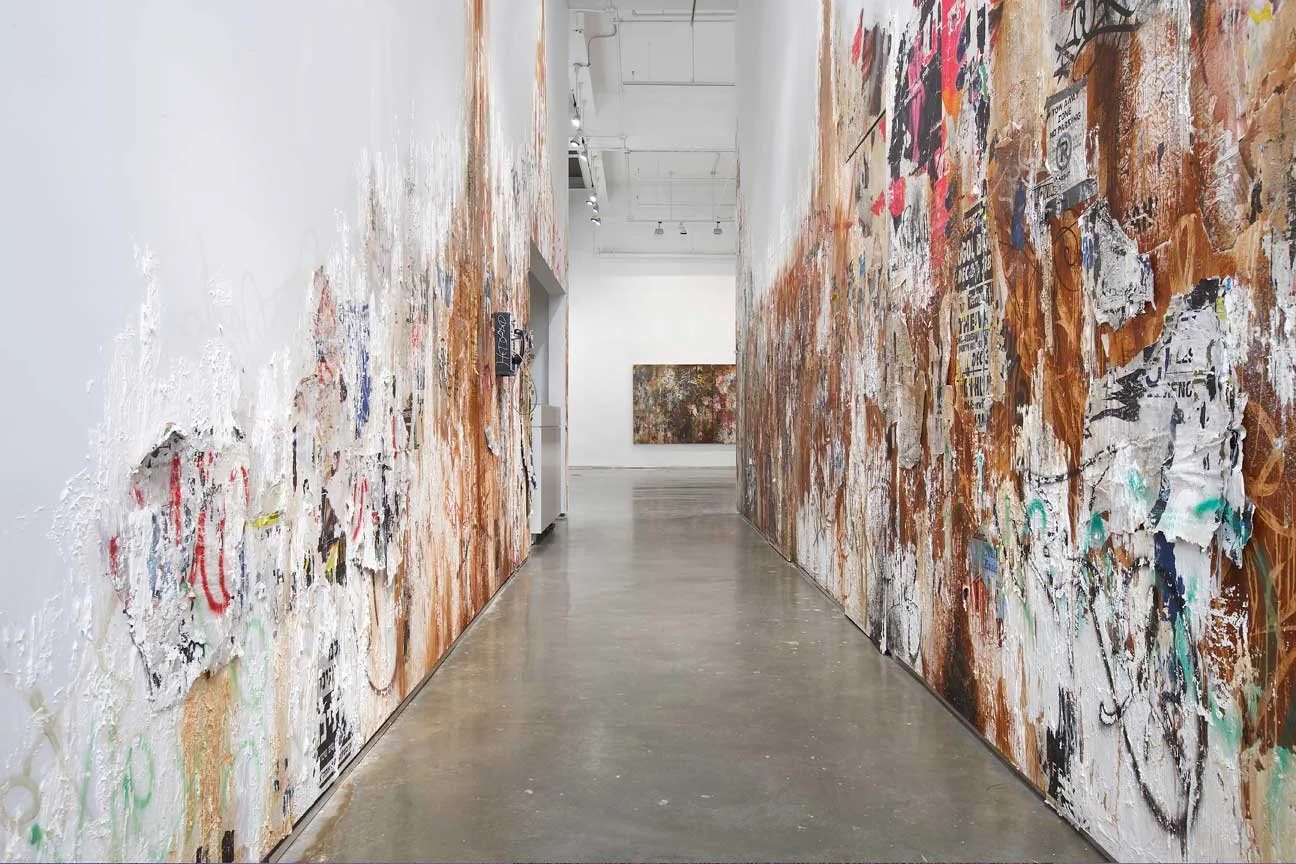
Bryce Wolkowitz Gallery, New York City, 2011
Walls, Diaries, Paintings presented fifteen new paintings inspired by José Parlá’s travels from Istanbul and Havana to Tokyo and New York. Drawing on the colors, textures, and layered surfaces of urban environments, Parlá transformed fragments of walls, streets, and architecture into richly personal meditations on memory, history, and the constant transformation of city life.
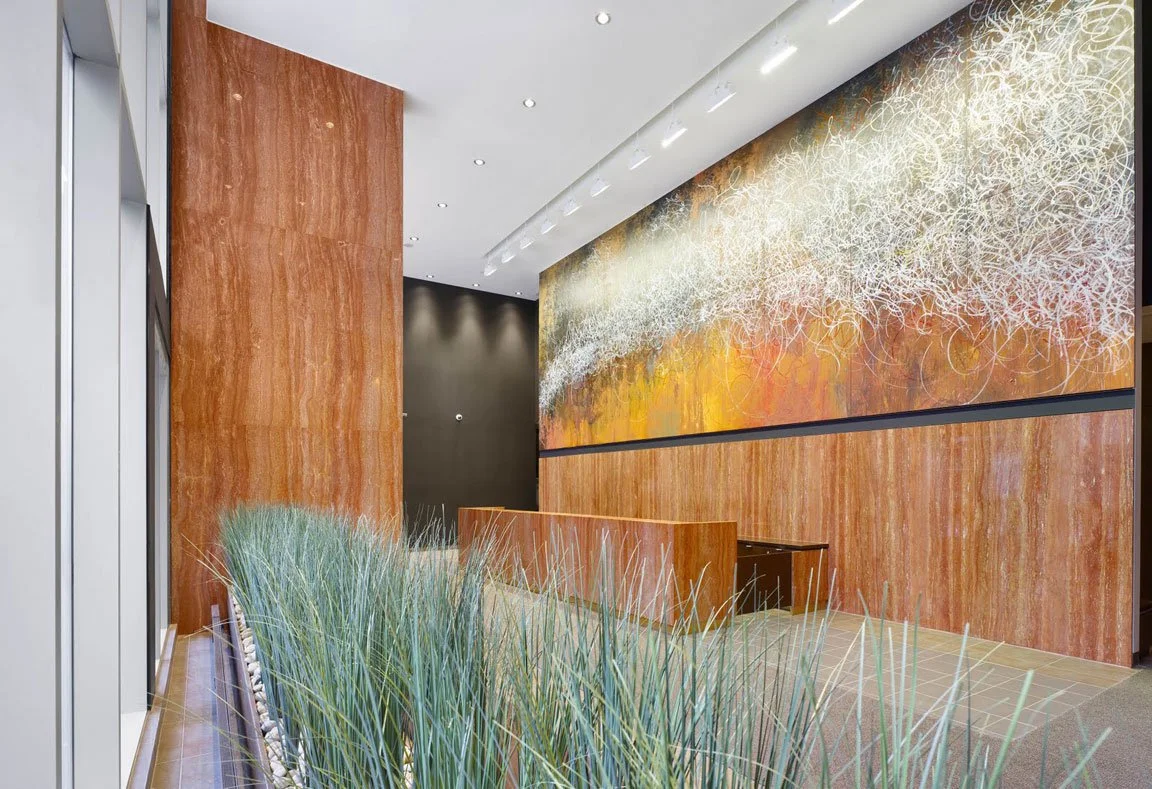
Concord Project, 2011 Toronto
Commissioned for Toronto’s Concord CityPlace, The Bridge was one of two monumental murals featuring José Parlá’s layered abstraction, calligraphic gestures, and handwritten inscriptions. The works explored memory, history, and community, honoring cultural figures whose influence endures across time.
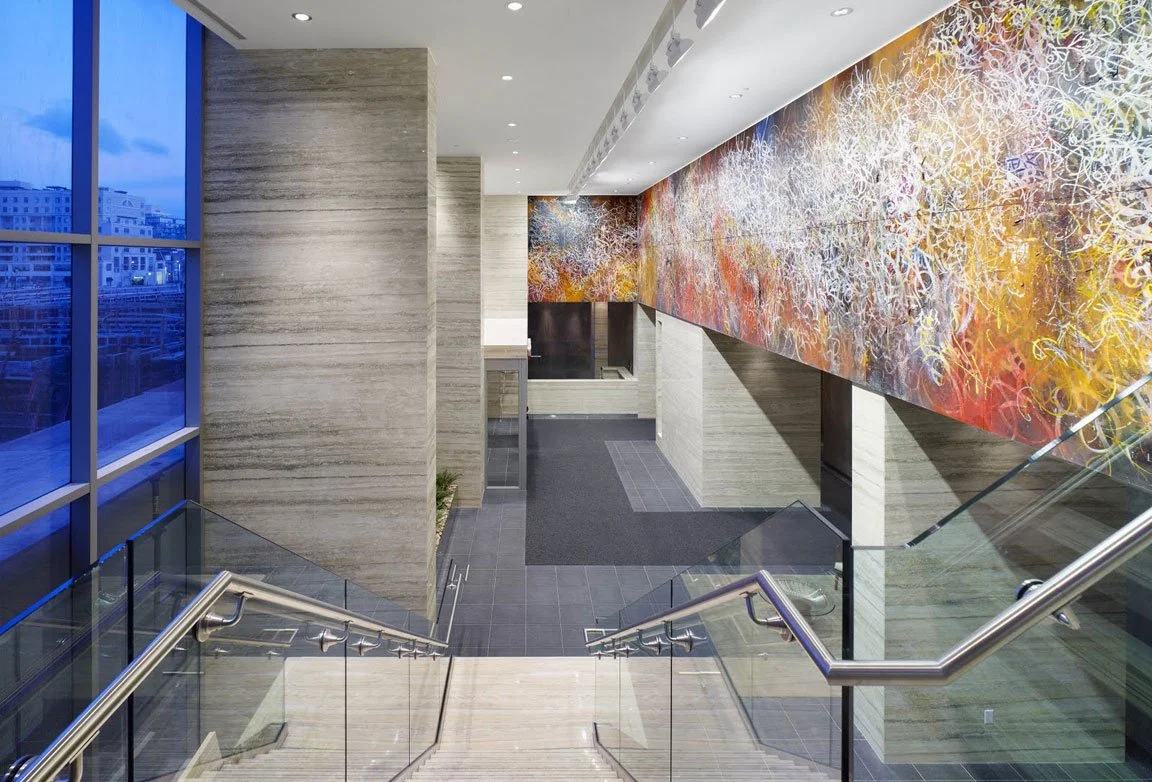
Concord Project, 2011 Toronto
The Names that Live But Sometimes Fade While Time Flies, 2011
Commissioned for Toronto’s Concord CityPlace, this monumental mural featured José Parlá’s layered abstraction, calligraphic gestures, and handwritten inscriptions. Alongside The Bridge, it honored artists and cultural figures while exploring memory, history, community, and enduring influence.